
Entomology Digest – Spring 2026

Letter from the Chair
Howdy, Entomology community! We hope this gets to you in time to celebrate the returning buzz of springtime!
As we enter the approach semester, I would just like give a shout out to the wonderful staff in the Russell Labs Hub, our talented undergraduate and graduate students, and our faculty, who all have been a force to reckon with this year. As you will see in our newsletter, we have many award winners and accomplishments to report.
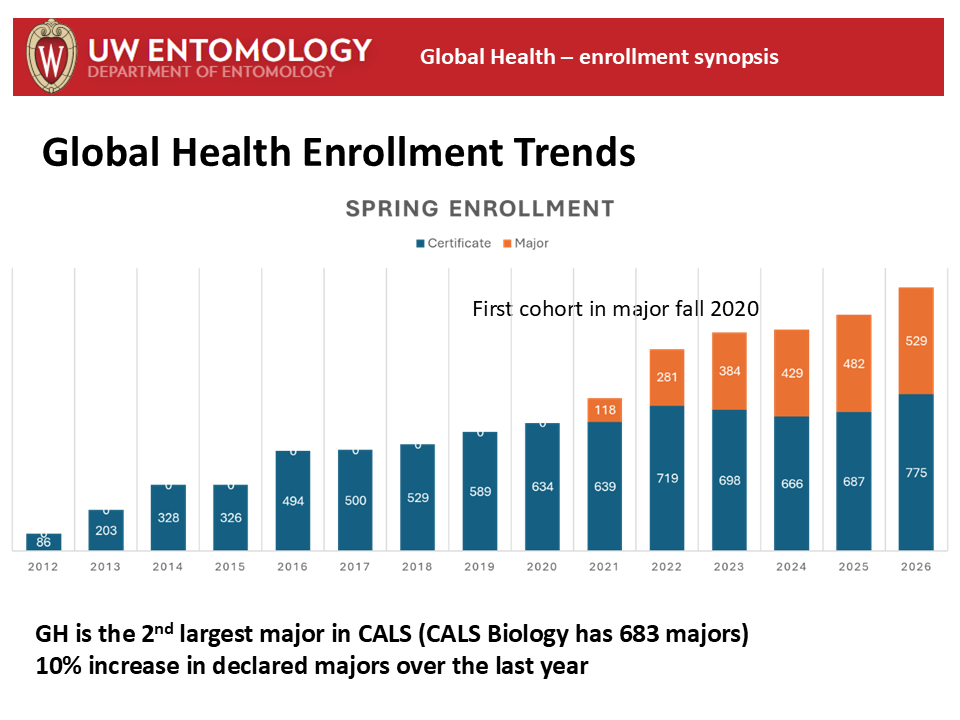
One of our major accomplishments is our undergraduate major in Global Health, which continues to grow and is a place where we contribute to high impact teaching practices (40-50% of GH majors study abroad, ~25% engage in research, and ~20% participate in a field experience or internship).
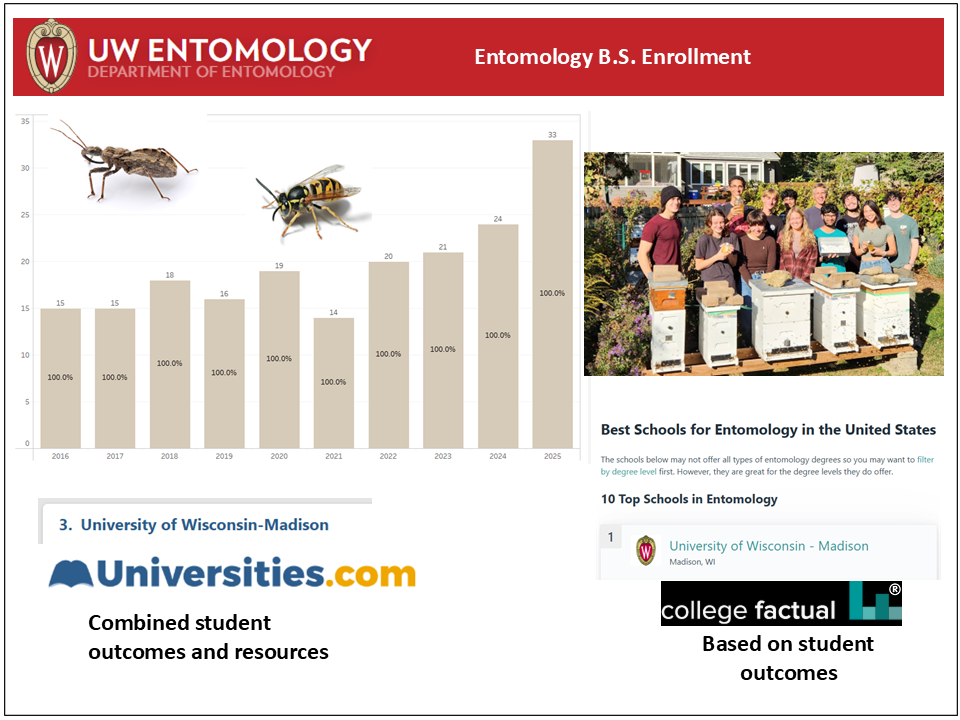
Our Entomology undergraduate program is also growing and ranks among the best in the country. Word has gotten out about the rich experience students get in our classrooms and research labs.
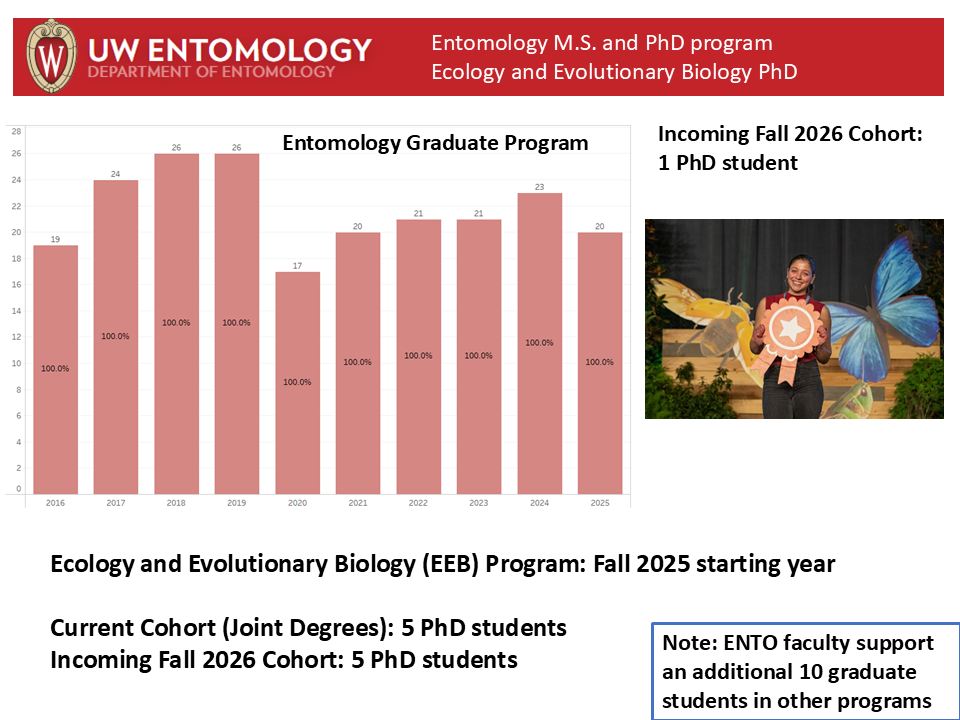
Finally, we have much to be proud about in our efforts in graduate education, with our outgoing students who contribute to a vibrant campus community within and outside the department. I share the following slide, because although our department and UW Madison are weathering changes to federal funding, we are experiencing a sharp decline in graduate student recruitment. Our body of graduate students is expected to tip below a steady cohort size in the next few years. This trend is occurring in departments across campus and institutions across the nation, with potentially long-lasting ramifications for the scientific advancement. If you are able, please consider giving donations, to support the graduate and undergraduate training mission of the department. We would particularly welcome investments the opportunities for students to conduct research and advance their careers.
In other news, we look forward to several new faculty recruits. There is an on-going search for a Fruit Crop Entomologist, and we will welcome the global change biologist Dr. Michael Belitz in the fall.
Best wishes and hope you have a great summer ahead!
– Sean Schoville, Professor and Chair of Entomology
Lab Updates
Groves Lab
Dr. Russell Groves | Lab website
The Vegetable Entomology Laboratory is planning for the summer field season, 2026. Consistent with past seasons, Dr. Scott Chapman (PhD 2000) is busy working to complete a series of efficacy, residue and crop safety trials associated with the IR-4 Project. Planned for 2026, Scott has an early estimate of 12 experimental trials planned with an additional 5-6 trials pending review and approval. A combination of field and greenhouse trials, these protocols cover a range of specialty crops including cucumber, dill, pea, strawberry, sweet corn, basil, peppermint, sunflower and hemp.
Sumikshya KC joined the laboratory in early 2026 and has worked on two projects focused mainly on insects in relation to the transmission of plant disease. The first of these projects is in association with Claire Schloemer where they have been extracting total RNA from infected potato tubers to ascertain Potato virus Y infection status from experiments conducted in 2025. Next, Sumi is leading a project to assess the relative susceptibility of different carrot cultivars to infection by Candidatus asteris phytoplasma, the causal agent of Aster Yellows disease.
Victoria Salerno (PhD student joint with Dr. James Crall) was awarded 2nd Place at the Entomological Society of America’s Annual Meeting in Portland, OR (Nov 2025), in the 10-Minute Presentation: SysEB Section, on Honey Bees and Native Bees and entitled, “Assessing the impact of solar installations on solitary bee foraging and in-nest behavior”. Victoria just submitted the first manuscript from her PhD thesis entitled, ‘OsmiaCAM: A low-cost imaging monitoring system for linking solitary bee foraging, nest provisioning, and environmental sensitivity.’
Morgan Weissner (PhD student) received direct financial support ($140K) from Greenlight Biosciences (GLB) in December, 2025 for her research investigating, “Transgenerational effects of a dsRNA-based insecticide on the Colorado potato beetle.” Outcomes of Morgan’s MS research were also presented at the 25-Year Anniversary of RNAi for Pest Management: “Milestones and Prospects – Applied Outcomes” symposium and her presentation was entitled, “Heritable effects of RNAi-based pest control on the Colorado potato beetle’. This paper was recently published in Pest Management Science and citation can be found below.
Emma Terris (PhD student joint with Dr. Sean Schoville), received recognition from the Wisconsin Potato Industry Association and the College of Agricultural and Life Sceinces for being seleted as the 2025, Wisconsin Distinguished Graduate Fellow (WDGF) supported by the Wisconsin Potato and Vegetable Growers Association. Wisconsin Distinguished Graduate Fellowships are awarded to proven, outstanding students who have shown research excellence in either applied or basic sciences.
Claire Schloemer (PhD Student), was selected as a 2025 Foundation for Food and Agriculture Research Fellowship awardee and this program provides career guidance to the next generation of food and agriculture scientists and intends to prepare fellows for STEM-based careers. Claire’s research focuses on management of Potato Virus Y in seed potato production, and her research was featured in the September issue of the Badger CommonTater.
Chris Blume (PhD student) Entomology Lead, Bayer Crop Science (BCS), Waterman, IL) in BCS specializes in agricultural solutions aimed at improving crop yield and sustainability. The site offers products in areas such as crop protection, weed management, and seeds and traits, utilizing biotechnology for enhanced plant breeding. Chris’ group works to innovative solutions for disease management and insect management, supporting farmers in cultivating crops efficiently while reducing environmental impact.
Ben Bradford (MS 2016) has been a researcher in the laboratory for over a decade and contributes very significantly to many projects. A key area of his success has been the development and maintenance of our decision support tools. These decision aid systems provide accurate and timely guidance on pest management and plant protection across a range of agronomic and specialty crops in Wisconsin and Midwest region. Examples of the sites he has built or contributes to directly include:
- UW Extension AgWeather
- Vegetable Disease and Insect Forecasting Network (VDIFN)
- Wisconsin Irrigation Scheduling Program
- Crop Protection Network Crop Risk Tool
- Crop Protection Network Fungicide ROI Tools
- Alfalfa Frost and Persistence Planning Tool
- Wisconsin Potato Volunteer Risk Map
- Wisconsin Bee (WiBee) Data dashboard
- UW Entomology website
- UW Vegetable Entomology website
- UW Vegetable Pathology website
- Wisconsin’s Environmental Mesonet (Wisconet)
New Project Submissions
- USDA NIFA. Single-Atom Catalysts for Electrochemical Sensing of Neonicotinoids. Gunasekaran, S. Wei, H.,and Groves, R.L. (in review).
- USDA ARS, Potato Research Grants Program. Evaluating cultivar-specific risk for Potato virus Y infection and potential for lower input management. Groves, R.L., and Halterman, D. (in review).
Awards
- 2026 – D.K. Peterson Technology Transfer Award, UW College of Agricultural and Life Sciences
- 2026 – Industry Appreciation Award, Wisconsin Potato and Vegetable Growers Association
Select Publications (print or in press)
- Dimase, M., Bradford, B.Z., Weissner, M.A., Buzza, A., Manley, B., Alyokhin, A., Groves, R.L. and Nault, B.A. 2026. Optimizing application timing and frequency of a novel dsRNAi-based insecticide for Colorado potato beetle management. Pest Mgmt Sci., https://doi.org/10.1002/ps.70294
- Ingram, J., Mattupalli, J. Mudrak, E., Curtis, M., O’Neill, P., Davenport, P., Gudmestad, N. Charkowski, A.O., Groves, R.L., Babler, B.N., Whitworth, J. Frost, K.E.., Karasev, A.V., Gray, S.M. and Filiatrault, M. 2026. A Robust Potato Tuber Tissue Collection Method to Investigate Potato Virus Y, Potato Mop-Top Virus, and Tobacco Rattle Virus Localization Patterns Plant Dis. https://doi.org/10.1094/PDIS-11-24-2453-RE.
- Cohen, A.L., Bradford, B.Z., Groves, R.L. and Szendrei, Z. 2026. Interactions among weather and landscape affect Colorado potato beetle population dynamics. PLoS One https://doi.org/10.1371/journal.pone.0345180
- Salerno, V., Tang, A., Mora, J., Argueta-Guzmán, M., González, B., Peterson, S., McFrederick, Q.S., Palumbo Gaiarsa, M., Crall, J. 2026. OsmiaCAM: A low-cost imaging monitoring system for linking solitary bee foraging, nest provisioning, and environmental sensitivity. Integ Comp Biol., (In review).
- Terris, E., Bradford, B.Z., Kulzer, F., Clements, J.C., LaMour, K.H., Schoville, S.D., and Groves, R.L. 2026. Assessing the potential for insecticide cross-resistance to a novel compound in the Colorado potato beetle (Leptinotarsa decemlineata) using phenotypic and gene expression analysis. Pest Mgmt Sci. (In review).
Schoville Lab
Dr. Sean Schoville | Lab website
The Molecular Ecology lab congratulates long-time undergraduate scholars who are graduating this semester: Ariel Maurer (who was also recently awarded the 2026 CALS Undergraduate Student Leadership Award!), Jose Gaytan, Annika Webb, Sophia Simac, and Colin Tsuchi Yang! We are excited to celebrate all they’ve accomplished here at UW-Madison! Ari will be presenting her work at the North Central branch meeting of the Entomological Society, Jose will present at the National Council on Undergraduate Research conference, and Annika, Colin, and Sophia will present at the UW-Madison Undergraduate Research conference this Spring. We also welcome two new undergraduates to work in the lab, Samantha Surges and Zhiyina Chau.
Updates for graduate students in the lab include: Zach Farrand will be traveling this summer to the University of Otago in Dunedin, New Zealand to help with a project studying wing loss in alpine insects in Dr. Jon Waters’ lab. Ebony Taylor recently received 3rd place in the UW Campus 3-minute Thesis Competition. She will begin her research on coastal sand dunes insect biodiversity in South Florida. Emma Terris (co-advised by Dr. Groves) has submitted two papers to peer review. Dahn-young Dong published one paper, has another in review, will present at the National Association of Environmental Professionals conference this spring, and is on track to graduate in Fall. Roberto Carrera-Martinez just submitted one paper to peer review, published three this last year, and is also working towards graduation in the coming year.
Finally, Sean is proud to have received the Provost’s Distinguished Teaching Award.
Publications (last 6 months)
- MacDonald, Z.G., S D. Schoville, M. Escalona, M.P.A. Marimuthu, O. Nguyen, N. Chumchim, C.W. Fairbairn, W. Seligmann, C. Miller, E. Toffelmier, T.W. Gillespie, H.B. Shaffer. 2025. Genome assembly for the Sierra Nevada Parnassian (Parnassius behrii) and a brief review of butterfly genome sizes. Journal of Heredity: esaf093. Link to article
- Zaman, K., A.L. McCombs, D. Debinski, and S.D. Schoville. 2025. Combining multiscale replication in network and landscape genetic analyses to assess functional connectivity and population resilience in Parnassius clodius butterflies. Journal of Heredity 116(6):803-817. Link to article
- Dong, D., S. Paskewitz, J.Tsao, and S.D. Schoville. 2024. Genetic and landscape connectivity of blacklegged ticks during range expansion in select states of the Midwestern U.S. Ecology & Evolution 15(10): e72360. Link to article
Young Lab
Ann Marsh. There are several exciting developments to report from this past term. Ann completed the Higher Education Teaching and Learning Certificate marking a major milestone, as this will now formally serve as the minor for her Ph.D. The department also facilitated a unique interdisciplinary bridge when English Literature 553 visited the Manduca room. While studying insect-related poetry, the class took a guided tour to observe the biological subjects of their literary analysis firsthand. Finally, dissertation research remains in full swing, with the primary focus currently on the imaging of Tachinus species to build out the necessary data sets.
Jack Whisenant. Jack is preparing for this summer’s “Illustrating Insects” course: a distance-learning course exploring techniques for both traditional and digital illustration of specimens and scientific concepts for enhancing scientific communication work. This class is open and welcome to all undergraduate and graduate students from any major! Starting in March, Jack is moving to DC to work in the Entomology Department of the Smithsonian as a collections specialist. He is also part of the team coordinating the Entomological Collections Network (ecnweb.net – free to join!), a society dedicated to collections and the ways in which they continue to contribute to a wide range of systematic and ecological studies. Jack still returns to Madison several times a year to visit and promises that he will keep working on completing the 3rd floor mural (it’s getting closer!).
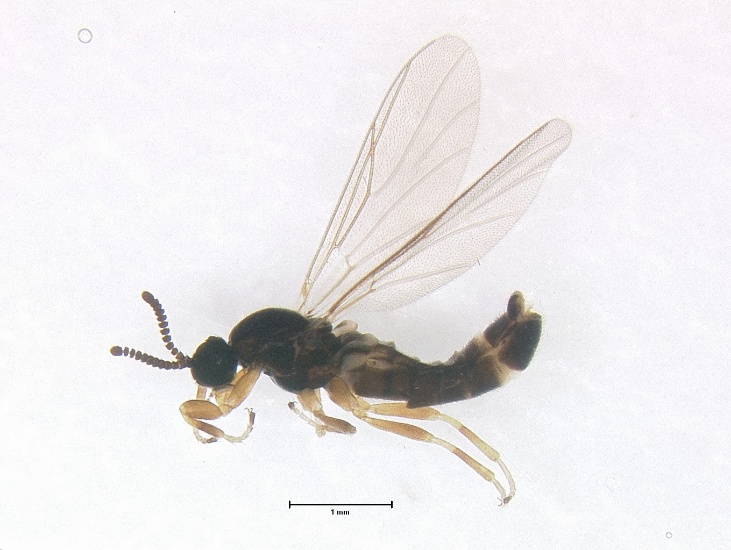
Dan Young. Instruction. Fall semester of 2025 had me teaching ENT 302: Introduction to Entomology (as always); my “FIG” course, ENT 375: Biodiversity and the Sixth Mass Extinction; and ENT 331: Taxonomy of Adult Insects (co-taught this time with PJ Liesch). The current winter/spring rotation includes ENT 302 (with a Sunday field collecting trip to the Cruson Slough in Richland County – by way of the Culver’s in Spring Green J). Also Advanced Taxonomy of Diptera. For the “Diptera course”, we’ll have four, all afternoon field collecting trips to Hemlock Draw, TNC in the Baraboo Hills of Sauk County. We will also spend 17-19 April in the field back up at Kemp Natural Resources Research Station in Oneida County, in search of new, cute little 2-winged beasties like the first record of the family Canthyloscelidae in Wisconsin.
Young, D. K. 2025. New Wisconsin State Records for Symmerus (Diptera: Ditomyiidae) and Synneuron (Diptera: Canthyloscelidae). The Great Lakes Entomologist 57: 200-207. https://scholar.valpo.edu/tgle DOI: 10.22543/0090-0222.2493
Outreach. In October, I was invited to provide a presentation for the Fond du Lac chapter of the Audubon Society and in February I spoke to our UW Undergraduate Zoological Society. I will be giving an invited firefly talk at the Hunt Hill Nature Center up in Washburn Co., 10 June, and I may build in an extra day or two for some field work. The annual BioBlitz (Milwaukee Public Museum) is 12-13 June back at Wehr Nature; always fun. I’ll be doing a “bug walk” Wednesday, 15 July at Olbrich Gardens.
Research. Wisconsin-based summer 2025-2026 fieldwork will again focus on Malaise trap sampling at Hemlock Draw and Kemp Natural Resources Research Station. Preliminary sorting is still way behind!
Research Publications
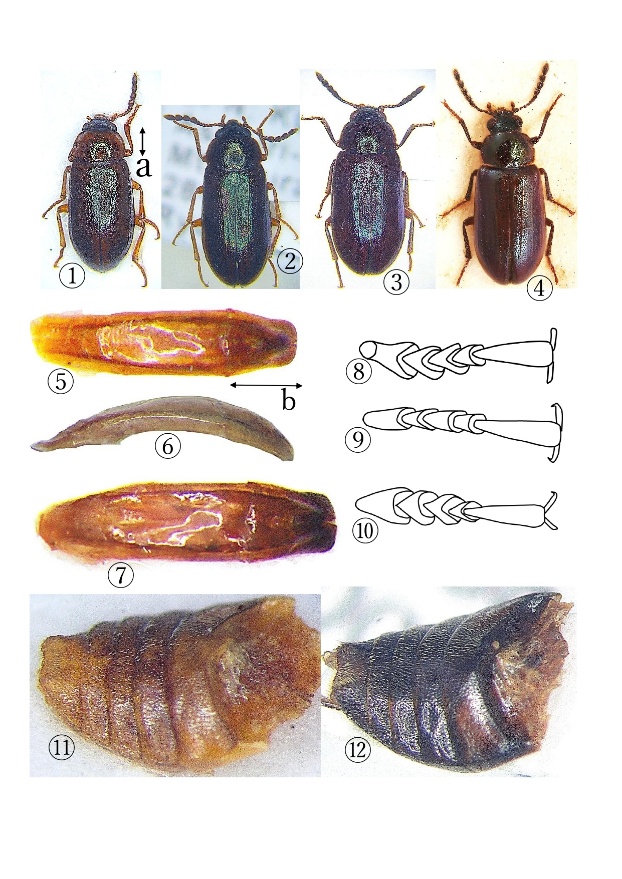
- Young, D. K. and J. D. Marché II. 2025. New Wisconsin state records for three species of Eusphalerum Kraatz (Coleoptera: Staphylinidae: Omaliinae). The Great Lakes Entomologist 58: 87–89.
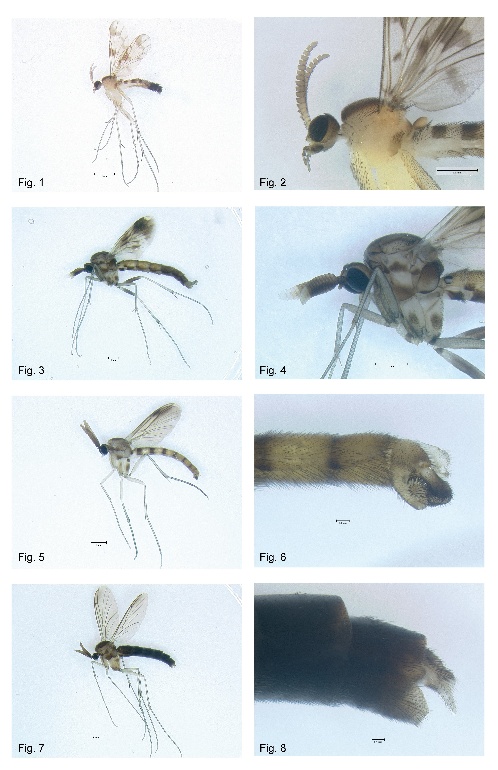
- Young, D. K. 2026. New Wisconsin state records for predatory fungus gnats (Diptera: Bibionomorpha: Keroplatidae). The Great Lakes Entomologist (accepted) 12 manuscript pages + one figure plate.
- Saitȏ, M. and D. K. Young. Description of a new species of Tetratoma (Coleoptera, Tetratomidae) allied to T. sakagutii, from the Kyushu, Japan (submitted to Acta Musei Silesiae. Scientiae Naturales) 9 manuscript pages, 1 figure plate.
Wisconsin Insect Research Collection
Dr. Craig Brabant | WIRC website
We continue to make progress on our aquatic invertebrate project, BenthicNet. Collaborators met for three in-person and one virtual workshop since September. Dr. Jessica Orlofske (UW Parkside) demonstrated a variety of aquatic sampling techniques on the Wisconsin River during the first workshop. For the second workshop, we hosted everyone here in Russell Labs for discussions on insect curation and collection management best practices. Jeffrey Dimick (UW Stevens Point) demonstrated slide-mounting techniques and chironomid larvae identification during Workshop 03. Our collaborators at the Milwaukee Public Museum hosted a virtual Workshop 04, were we discussed Darwin Core (a biodiversity information standard), as well as other data management best practices.
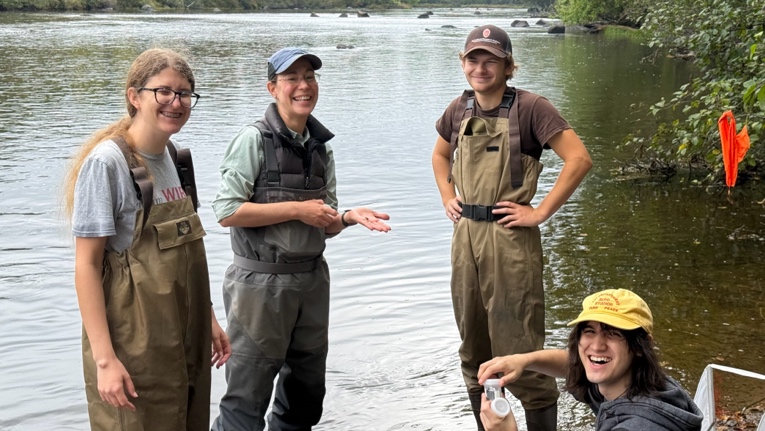
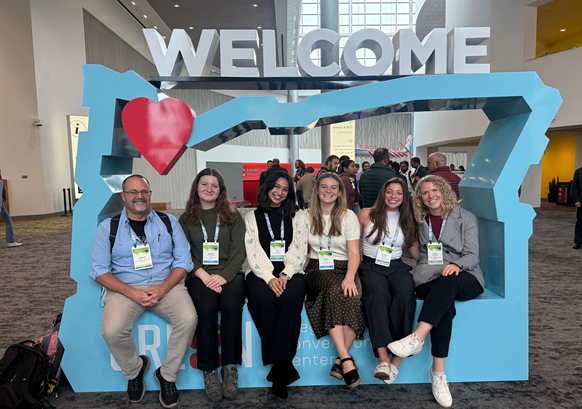
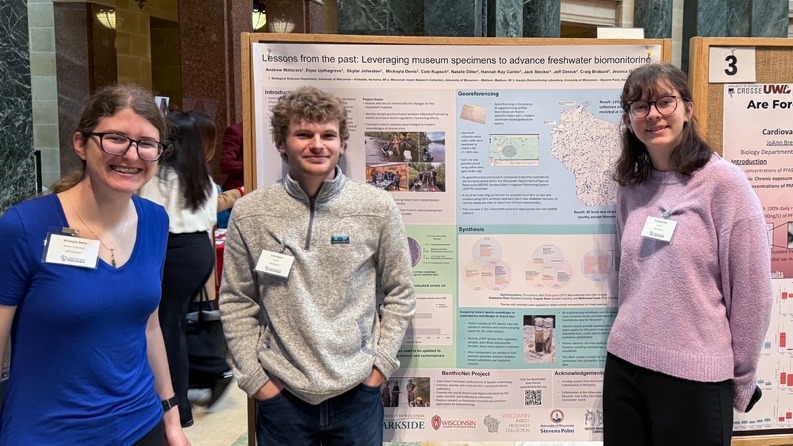
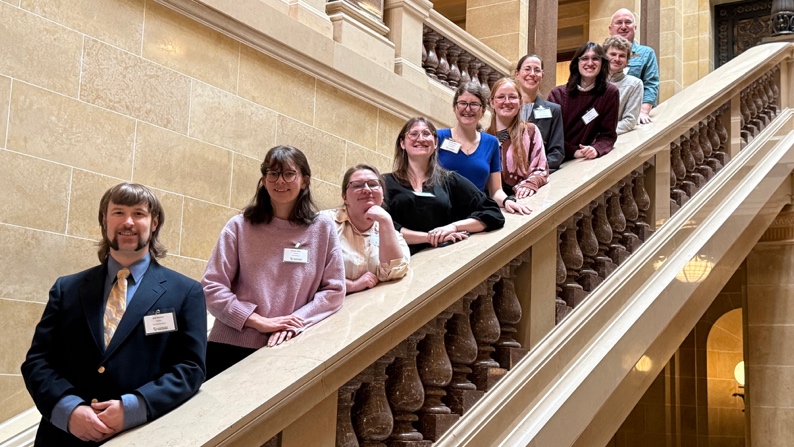
In March, the BenthicNet team presented a poster during Research in the Rotunda at the Wisconsin state capitol. “Research in the Rotunda is a wonderful opportunity to learn about the exciting research going on throughout the state and to support Universities of Wisconsin students and faculty members who contribute to the state’s strong economic future.” UW-Madison BenthicNet members Cole Kupsch (Entomology undergraduate), Mickayla Denis (recent Entomology graduate), and Natalie Diller (UW undergraduate) are proudly standing in front of their poster in the image above. Cole and Mickayla will also be sharing their poster at next month’s Wisconsin Entomological Society Meeting in Milwaukee.
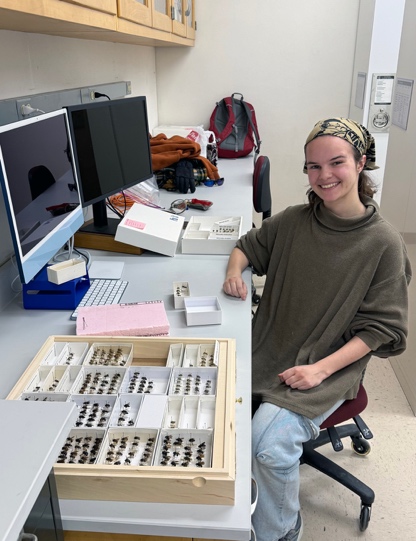
Elizabeth Ehlert (Entomology & Evolutionary Biology undergraduate) continues the work on her Fall WIRC Internship project, interpolating the significant donation of Wisconsin bees donated to the WIRC by retired UW-Green Bay professor, Dr. Amy Wolf. After sorting and putting away over 11,500 specimens, Elizabeth is nearly done!
And finally, I managed to stray outside of my comfort zone to coauthor an ecology paper: Campbell JW, Pei CK, Morphew AR, Brabant CM and Spevak EM (2025) Bison wallowing alters pollinator nesting and foraging resources in shortgrass sagebrush steppe in the Northern Great Plains. Front. Ecol. Evol. 13:1665879.doi: 10.3389/fevo.2025.1665879
Guédot Lab
Dr. Christelle Guédot | Lab website
Birhanu Sisay Amare, Fatma Besbes, Sophie Perry, Emilie Parkanzky, and Elizabeth Hrycyna continue their great work in the lab. Fatma, Sophie, Emilie, and Elizabeth organized a well-attended symposium at the Annual meeting of the ESA in Portland, OR titled: “Microbial Hitchhikers: Microbe Mediated Insect-plant Interactions in Agricultural Systems”. At that meeting, Sophie won second place in the Graduate Student Poster Competition! They will be hosting another symposium at the ESA NCB this April in Des Moines, IA called: “Participatory IPM: Involving growers in specialty crop pest management research”, while also presenting their research in the student competition. They also presented their research at grower meetings during the field season and at the Growing Wisconsin Conference and the Hemp Field Day.
Sophie Perry will be wrapping up her Master’s Degree in Agroecology this spring. She is heading off to Vermont to manage vegetable production at Bread and Butter Farm, where she will help manage the farm’s transition to agroforestry. Damian Rodriguez, who was a Bioscience Youth Apprenticeship high school fellow in our lab last summer will be returning to assist us this summer, we look forward to hearing how his degree at UW-River Falls is coming along. And recently, Emilie Parkanzky received the 2026 CALS Graduate Service and Outreach Award. Congratulations Emilie!
Christelle was the Section Editor on Berry Fruit for a CABI book “Trap Cropping” led by Dr. Heikki Hokkanen and she contributed a chapter on “Trap Cropping Applications in Strawberry” with lead author Matthew Hetherington. As co-chair of the CALS Equity and Diversity Committee, she continues to work with colleagues across CALS to move forward a healthy climate in the College and departments. This coming Fall, she is excited to offer ENTOM 344 From Flowers to Food: Pollinator Ecology and Conservation to share her passion for pollinators with students.
Publications
- Robbins F., Oker H., Guédot, C., Bick E. 2026. Exploring pest population dynamics using the economic entomology modeling activity. Natural Sciences Education. In press.
- Ajiferuke, O., Lamm, A., Lee, C.-L., Byrd, A., Pinero, J., Digiacomo, G., Blaauw, B., Rivera, M., Wilson, J., Guédot, C., Schoof, S., Biddinger, D., Krawczyk, G., Walgenbach, J., Nielsen, A., Shapiro-Ilan, D., Leskey, T. 2026. Assessing Eastern U.S. Tree Fruit Growers’ Pest Issues, Practices, and Preferences to Inform Effective IPM Communication. Journal of Integrated Pest Management. In Press.
- Trickle, C., Sweet C., Holland L. Guédot C. 2025. Seasonal phenology of leafhopper species in Wisconsin cranberry and density-dependent feeding injury from leafhoppers on cranberry vines. Acta Horticulturae. 1440: 193-198. https://doi.org/10.17660/ActaHortic.2025.1440.27
Bick Lab
Student Achievements
Two of our MS students (Alexander Arovas and Lauren Glynn) in Biological Systems Engineering will be graduating this spring semester. In addition, Entomology PhD student Fletcher Robbins has been awarded an American‑Scandinavian Foundation Fellowship to conduct a research visit with Dr. Niels Holst at Aarhus University (Dr. Emily Bick received the same fellowship in 2017 for her work with Dr. Holst). Fletcher will be spending several weeks there collaborating on a modeling and pest monitoring research project, which should be a great opportunity to expand both the applied and international dimensions of his work. Fletcher has also been selected for an Applied Analytics summer internship with Syngenta Crop Science, where he’ll be working with their team to analyze yield variability in breeding trials. He’s looking forward to gaining more experience applying quantitative methods in an industry setting.
PhD student Louis Le Breuilly was selected to participate in the Morgridge Entrepreneurial Bootcamp this summer. This marks the third consecutive year that Bick Lab members have taken part, following former CS MS student Dev Mehrotra and current BSE MS student Alexander Arovas.
We are also delighted to report that three current or former lab members have been accepted to graduate programs this cycle. Congratulations to Kayley Seow for her acceptance to Brown University, Dhruv (Nachiket) Kerai for his acceptance into CMU, UT Austin, USC, and UW-Madison, Sean Chang, for his acceptance into UW-Madison.
Faculty Recognition and Lab Impact
In November, Dr. Emily Bick was invited to Saudi Arabia to receive the International Date Palm Prize for her acoustic work with the Insect Eavesdropper as a tool for pest management. She delivered the plenary address at the Sixth International Date Palm Conference and Exhibition.
A new UK‑based company, BugBug LTE, has spun out of the Bick Lab to support commercialization of the Insect Eavesdropper technology. This work was recently featured in the UW Innovate profile “From Lab to Launch: How Entrepreneurship Amplified Emily Bick’s Impact on Global Agriculture”, highlighting the lab’s contributions to understanding pest impacts on crop loss, plant diversity, pest suppression, and novel monitoring approaches.
The Bick Lab’s research was also featured by the North Central IPM Center in their “Central Issue” webinar, “Spying on Insects with the Insect Eavesdropper,” and covered in Vegetable Growers News. A related arXiv preprint, “Web-Based Application for Visual Inspection of Audio Recordings”, describes the development of BickGraphing, an offline visualization platform originally created for Insect Eavesdropper acoustic data.
Extension Highlights
As part of her Extension role, Dr. Bick identified Wisconsin’s first cases of pyrethroid resistance in corn earworm, reported in the statewide Badger Crop Update series and covered in a Brownfield Ag News interview.
Crall Lab
The lab had a busy fall and winter! Several members of the lab (Gigi Melone, Anupreksha Jain, Nicole DesJardins, Ari Grele, and Victoria Salerno) traveled to the Entomological Society of America conference in November to give talks, where Victoria won 2nd place in the SysEB student talk presentation. Congrats Victoria!! Nicole and Acacia Tang also attended the Society for Integrative and Comparative Biology in January, where Acacia gave an invited talk in a symposium on “Behavioral and environmental monitoring with open-source, low-cost tools”. James also had the opportunity to travel to Aarhus University in Denmark (with Emily Bick) in October to teach and mentor as part of an international summer school for Computational Entomology.
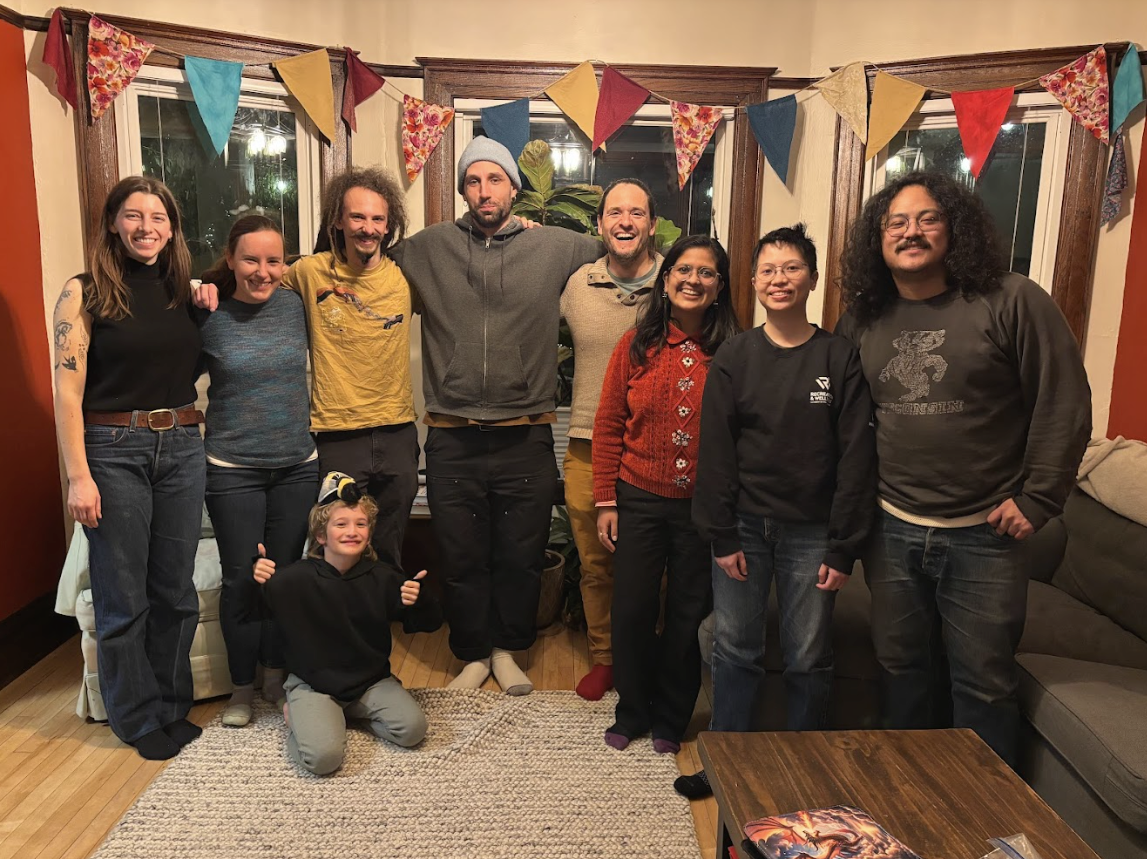
We are also excited about two new grants supporting research projects in the lab, one from QTS Data Centers to study the effects of landscape management on pollinator on data center campuses, and a second from Wisconsin DATCP to study the effects of temperature of pollination effectiveness in cranberry.
New publications
- Smith MAY, Bernauer OM, Melone G, Graham B, Wiessing J, Salas R, Hemberger J, Bhattacharyya A, Tang ATS, Rojas E, San Miguel J, Spiesman BJ, Gratton C, Crall JD (in press). AutoPollS: a tool for automated monitoring of pollinators using deep learning. Accepted at Methods in Ecology and Evolution.
Bugs in the News
- A particle accelerator helped scientists create stunning 3D ants. Researchers have developed a high-tech system that rapidly scans ants and converts them into detailed 3D models. Using a synchrotron accelerator, X-ray imaging, robotics, and AI, the team scanned 2,000 specimens in just a week and produced models of 800 species. The images reveal microscopic anatomy that was previously difficult to study. The growing Antscan database could become a powerful digital library of biodiversity. – ScienceDaily, NYTimes
- Bumblebee Queens Can Breathe Underwater. A new study offers clues as to how the insects survive flooding as they emerge from a hibernation-like phase every winter. While surviving for a full week underwater, the insects have the ability to breathe even as they are fully submerged, according to research published Wednesday in the journal Proceedings of the Royal Society B. It’s a critical ability because queen bumblebees spend six to nine months in diapause, a hibernation-like phase. They hunker down during those colder months in shallow burrows, which can become waterlogged from rainstorms and snowmelt. Surviving over the winter is crucial for the insects to be able to establish their colonies come spring. – NYTimes
- A Hot Plant’s Irresistible Signal Makes Beetles Pollinate It. If a plant wants to reproduce, there are a number of tricks it can use to lure a pollinator insect. It can display gaudily colored flowers to catch their eyes, or appeal to their noses with sweet or pungent scents. Then there are the cycads. These 250-million-year-old tropical plants look like palms and reproduce with structures resembling pine cones. And to secure their next generation, they get hot. Their warm glow at dusk tempts beetles with unique infrared-sensing antennae in a relationship so ancient it may be at the basis of all pollination as we know it, according to a study published Thursday in the journal Science. – NYTimes
- These Ants Found a Loophole for a Fundamental Rule of Life. Researchers discovered that Mediterranean ants are having babies that belong to a different species. In a paper published earlier this month in Nature, researchers reported how queens of the Mediterranean harvester ant species Messor ibericus could produce male offspring of a different species, Messor structor. The M. ibericus ants then used the M. structor males to create hybrid workers who supported the colony. – NYTimes
- Scientists discover the protein that malaria parasites can’t live without. Scientists have uncovered a crucial weakness in the malaria parasite that could open the door to new treatments. Researchers identified a protein called Aurora-related kinase 1 (ARK1) that acts like a traffic controller during the parasite’s unusual cell division process, ensuring its genetic material is properly separated as it multiplies. When scientists switched off ARK1 in laboratory experiments, the parasite could no longer replicate correctly and failed to complete its life cycle in both humans and mosquitoes—effectively halting its ability to spread. – ScienceDaily
- Flea and tick treatments for dogs and cats may be harming wildlife. Flea and tick medications trusted by pet owners worldwide may have an unexpected environmental cost. Scientists found that active ingredients from isoxazoline treatments pass into pet feces, exposing dung-feeding insects to toxic chemicals. These insects are essential for nutrient cycling and soil health. The findings suggest everyday pet treatments could ripple through ecosystems in surprising ways. – ScienceDaily
- Microplastics have reached Antarctica’s only native insect. Even Antarctica’s toughest native insect can’t escape the reach of plastic pollution. Scientists have discovered that Belgica antarctica — a tiny, rice-sized midge and the southernmost insect on Earth — is already ingesting microplastics in the wild. While lab tests showed the hardy larvae can survive short-term exposure without obvious harm, those exposed to higher plastic levels had reduced fat reserves. – ScienceDaily
- Forests are changing fast and scientists are deeply concerned. Forests around the world are quietly transforming, and not for the better. A massive global analysis of more than 31,000 tree species reveals that forests are becoming more uniform, increasingly dominated by fast-growing “sprinter” trees, while slow-growing, long-lived species are disappearing. These slower species act as the backbone of forest ecosystems, storing carbon, stabilizing environments, and supporting rich webs of life—especially in tropical regions where biodiversity is highest. – ScienceDaily
- How gene loss and monogamy built termite mega societies. Termites did not evolve complex societies by adding new genetic features. Instead, scientists found that they became more social by shedding genes tied to competition and independence. A shift to monogamy removed the need for sperm competition, while food sharing shaped who became workers or future kings and queens. Together, these changes helped termites build colonies that can number in the millions. – ScienceDaily
Recent posts »
- Entomology Digest – Spring 2026
- New bug-tracking project aims to help monitor health of Wisconsin waterways
- UW Entomology students Victoria Salerno and Sophie Perry recognized at ESA
- Dr. Emily Bick receives International Date Palm Prize
- Invasive tree-killing pest ‘highly likely’ to show up in Wisconsin, expert says